
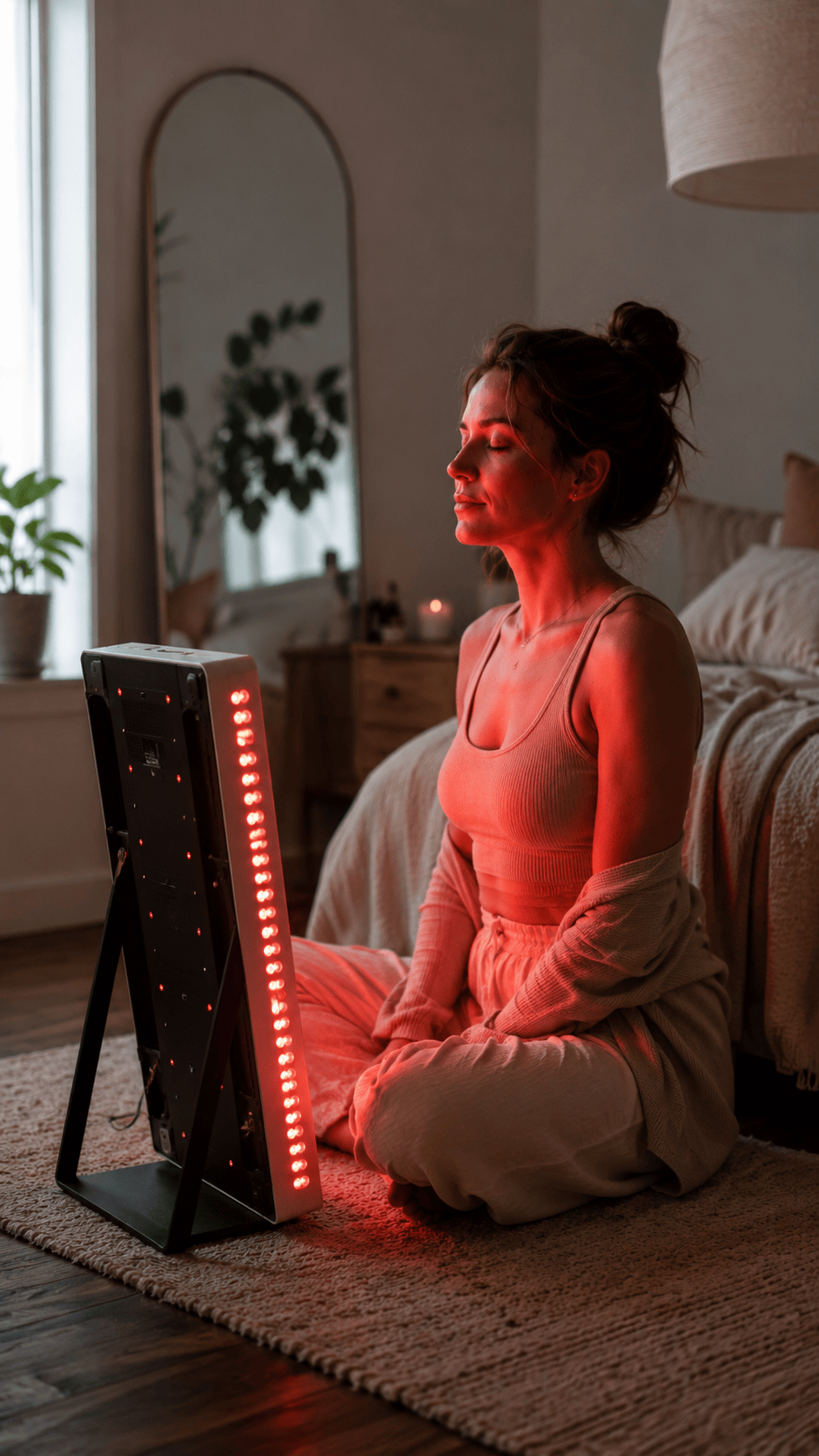
Red light therapy has moved from specialist clinics into bedrooms, bathrooms and home gyms. You can now buy face masks, handheld devices, flexible wraps and full-body panels at dramatically different prices.
Supporters claim these products improve skin, accelerate muscle recovery, reduce inflammation and boost cellular energy. Some applications are supported by promising evidence, but that does not mean every device—or every marketing claim—is equally reliable.
What Is Red Light Therapy?
The scientific term commonly used is photobiomodulation. It involves exposing tissue to specific wavelengths of red or near-infrared light using LEDs or low-level lasers.
Red-light devices commonly use wavelengths in approximately the 620–700 nanometre range, while near-infrared applications extend beyond visible red light.
Researchers have proposed that absorbed light can influence mitochondrial activity, cellular signalling and oxidative-stress pathways. However, treatment effects depend heavily on wavelength, dose, distance, exposure time and the condition being treated.
Face Mask or Full Panel?
Face masks are convenient for skincare routines. They keep the light source at a relatively consistent distance and allow you to move around.
Panels cover larger areas and may be more suitable for people interested in both skin and exercise recovery.
Handheld devices and wraps target smaller areas, but using them across the entire body may take considerable time.
Larger is not automatically better. Choose a device that matches the area you realistically intend to treat.
Red Light Versus Near-Infrared Light
Visible red light is often marketed for skin-focused uses because it acts closer to the surface.
Near-infrared light is invisible and is marketed for deeper tissues, including muscles and joints. Consumer devices frequently combine the two.
Do not assume that more wavelengths always produce better results. The device should clearly disclose its wavelengths and recommended treatment distance.
What Does the Evidence Say?
Dermatology research suggests photobiomodulation may have useful applications, but evidence quality and treatment parameters vary.
For exercise, local and whole-body photobiomodulation have been studied for performance and recovery. A recent systematic review assessed whole-body treatment but also highlighted the need to evaluate protocols and evidence carefully.
This is not the same as proving that any home panel will deliver the results shown in a controlled study.
What to Check Before Buying
Wavelength disclosure: Avoid products that only say “medical-grade red” without giving numbers.
Irradiance: This describes power delivered over an area, but manufacturer measurements are not always independently verified.
Recommended distance: Irradiance changes as you move away from the device.
Treatment time: A credible company should explain how long and how frequently to use the product.
Return policy and warranty: Important for expensive devices.
Eye guidance: Follow the manufacturer’s safety instructions. Bright light may be uncomfortable even when it does not contain ultraviolet radiation.
Independent testing: Look for transparent testing rather than influencer testimonials alone.
Who Should Be Cautious?
Speak with a qualified professional when you have a photosensitivity condition, take photosensitising medication, have an active eye condition, are pregnant or intend to treat an unexplained lesion.
Do not use a consumer red-light device to delay medical evaluation of pain, skin changes or other persistent symptoms.
Is It Worth the Money?
Red light therapy is most attractive when you have a specific goal, understand the limitations and will use the device consistently.
A face mask may suit someone focused on convenience and skincare. A panel may be more versatile, but it costs more and takes up space.
The smartest biohack is not buying the most powerful-looking machine. It is selecting a transparent, appropriately specified device—and resisting promises that sound too good to be true.
References
- Review of photobiomodulation mechanisms and clinical applications.
- Dermatology review of LED and photobiomodulation therapies.
- Clinical review of red and near-infrared photobiomodulation in dermatology.
- Systematic review of whole-body photobiomodulation for exercise performance and recovery.
- Clinical and scientific recommendations for photobiomodulation in exercise and recovery.
 Healthy Today Club
Leave a comment